





Garmin
Forerunner 201
The
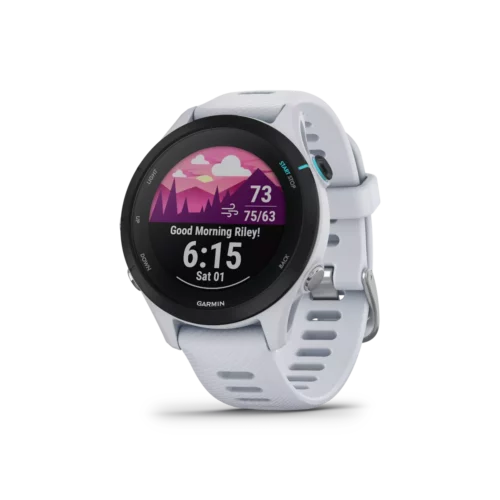
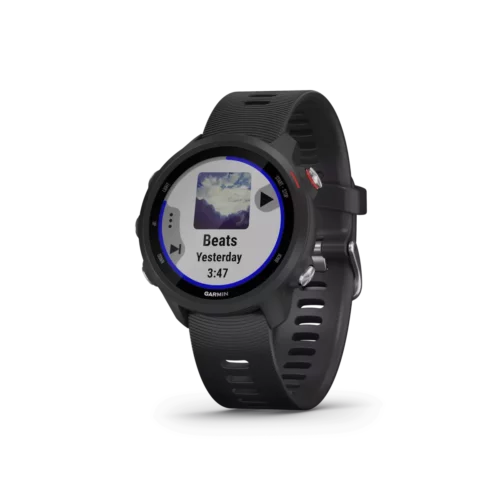
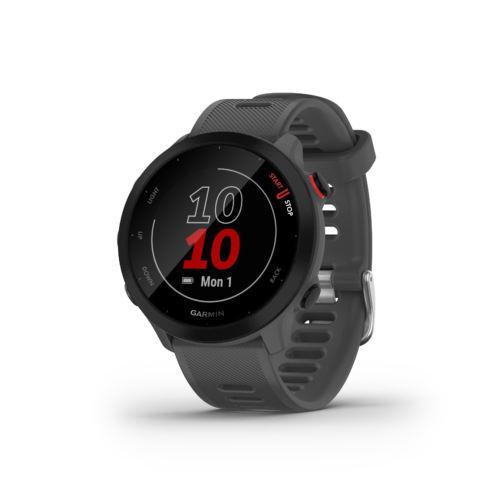
Forerunner 201 is a personal training device designed for
the recreational walker or runner as well as the high-performance
athlete. It offers an easy-to-read display, adjustable wristband
and an integrated GPS sensor. It is compact (3.3" W x 1.7"
H x 0.6" D), lightweight (2.75 oz) and waterproof (IPX7,
submersible 1 meter @ 30 minutes).
The
Forerunner 201 uses GPS satellites to calculate speed, distance and pace information.
Forerunner's Virtual Partner feature lets you input time, distance and pace goals,
and then shows you if you are ahead or lagging.
Forerunner
201 features
GPS sensor provides precise latitude, longitude, and altitude
data for exact location information.
Mark specific locations, and then look up and navigate
to these points using an electronic map.
Retrace your steps to a starting point or reverse your
normal route for routine variation.
Amount of calories burned can be tracked and calculated
over the course of a workout.
Lap history-such as lap time, lap distance, and average
pace-can be stored for up to two years.
Performance data can be automatically archived and calculated
to provide an accurate record.
Automated stopwatch provides auto-lap and auto-pause features.
Lap timer indicates when a certain speed is reached or
when you've fallen below a pre-set level.
Pace whistle sounds alert when you begin traveling slower
or faster than your desired pace.
Distance whistle sounds when you reach a specified duration
or distance in your workout.
Download free Garmin software to transfer data from your
Forerunner 201 to your PC for storage and analysis.
NOTE: NMEA 0183 protocol is not supported; the Forerunner
uses only Garmin protocol
FORERUNNER
BATTERY LIFE
Q: "What is the lifetime of the Li battery in the Forerunner 201/Foretrex
201?"
A: (From Garmin): "The battery is good for between 1000 and 2000
charge cycles, depending on how deeply discharged the battery becomes during
each charge cycle. You get 13 hours of battery life for every charge cycle. If
you were to run 3 hours a day, that's still 4 days between charges or about 91
charge cycles per year. If your unit only was good for 1000 charge cycles, then
that's still almost 11 years!"
GARMIN
BATTERY USER TIP:
"If the Forerunner is going to be stored for extended periods, the batteries
probably should be stored at 1/3 to 2/3 of a full charge. The batteries don't
like to be stored completely full or completely discharged."
Customer
Comment: "Referred By = Friends I run
with. Apparently this product has been tested out by them and is
the best of maybe 5 they tried."