





TrimTrac
Location Device
Frequently Asked Questions
What
is the TrimTrac locator?
What
are its major features and benefits?
What is unique about the TrimTrac locator?
Does the device
only work outdoors?
Does the
device work inside a moving vehicle?
Does the TrimTrac locator require installation?
What
wireless network standards does the TrimTrac locator support?
What geographic
areas does the device cover?
Why does the TrimTrac locator use GSM SMS instead of GPRS (General Packet
Radio Service)?
What kind of
power does the device require?
How long
do the batteries last?
What
are the TrimTrac locator's power requirements?
Can the TrimTrac
locator use external power?
How durable is the
TrimTrac locator?
How accurately
is the device able to report location information?
How frequently
can the device report position?
How big is the TrimTrac
locator and how much does it weigh?
Does anything need
to be provided with the device?
Can the device
send an alert to a cell phone?
How does the TrimTrac
locator compare to a vehicle recovery service such as LoJack?
Could someone
just build the device using off-the-shelf components?
Q: What is TrimTrac?
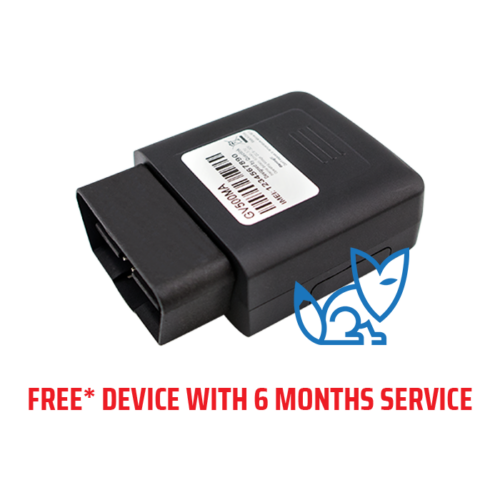
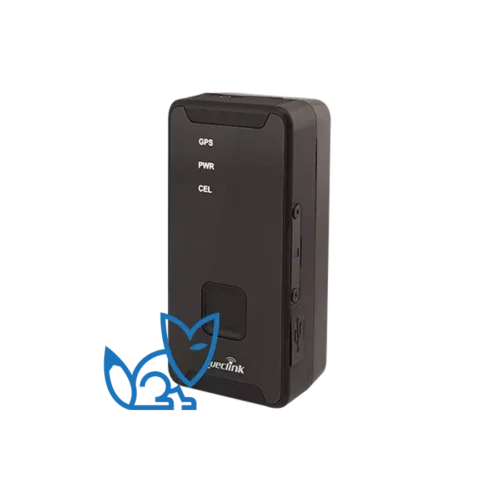
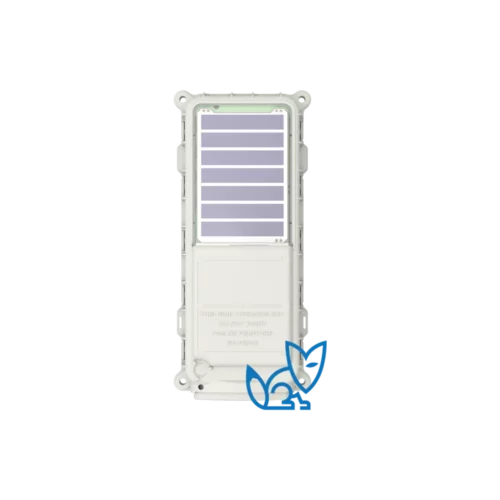
A: The TrimTrac locator is a new, low-cost tracking device for consumer
automotive monitoring and recovery applications and services. It
combines enhanced GPS autonomous positioning detection with GSM wireless
communications reporting.
Q: What are its major features and benefits?
A: The TrimTrac locator's major features
and benefits:
Features |
Benefits |
Integrated GPS and GSM using
single CPU |
Low cost, small footprint, low
power consumption |
Enhanced GPS sensitivity |
TheTrimTrac locator can determine
position in places where traditional GPS does not work |
Tri-band GSM 900/1800 MHz (DCS)
and 1900 MHz (PCS) |
Nearly ubiquitous coverage via
the prevailing worldwide standard for wireless digital communications |
Short Message Service (SMS) Support |
Efficient, cost-effective data
transmission |
Complete end-user device including
water resistant package and internal antennas |
Eliminates installation and reduces
costs |
Self-powered using four AA batteries
that last 90 days with typical usage |
Eliminates installation and enables
the device to work in places where power is unavailable |
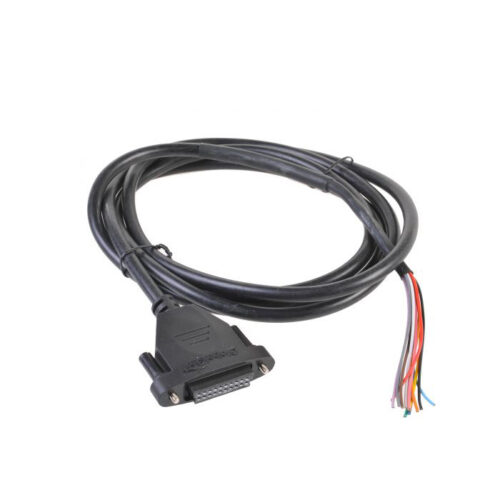
Optional Vehicle Adapter Module |
Leverages external power; standby
battery enables the device to continue working even if external
power is disconnected |
Multi-mode reporting capability |
Enables the end-user to select
the most optimum reporting method: motion detection, scheduled
daily or weekly reports and criteria based queries for on-demand
polling |
The most versatile solution on
the market |
The rugged and modular design
of TrimTrac combined with its GPS capabilities using GSM
standards, and its multi-mode reporting capability enables
a variety of applications in safety/security, as well as
fleet management applications. No existing solution can boast
such versatility and combine TrimTrac's performance with
such low costs of owerneship |
Low cost |
Significantly less expensive
than comparable devices |
Q: What is unique about the TrimTrac
locator?
A: All of the TrimTrac locator's functions are integrated on one
printed circuit board. The functions share a central processor unit
(CPU), enabling the TrimTrac locator's low cost, small size, power
conservation, and increased reliability.
Q: Does the device only work outdoors?
A: No. The TrimTrac locator supports enhanced GPS that enables it
to often work in places where traditional GPS may not.
Q: Does the device work inside a moving
vehicle?
A: The TrimTrac locator's enhanced GPS sensitivity enables it to
work reasonably well inside of a moving vehicle, even when it does
not have a clear view of the sky. The device is usually able to obtain
location fixes when it is inside packages, glove boxes, under seats
and in some cases, car trunks.
Q: Does the TrimTrac locator require
installation?
A: No, the device consists of a self-contained package that includes
all antennas and requires no external connections unless a vehicle
adapter module is used.
Q: What wireless network standards
does TrimTrac support?
A: The TrimTrac locator initially supports GSM (Global System for
Mobile Communications). GSM is the standard for digital cellular
communications in much of the world. In the United States, there
are competing standards, including AMPS, CDMA and TDMA; however,
GSM enjoys equal or better coverage compared to the other digital
standards. As with the other digital standards, the TrimTrac locator's
GSM coverage is strongest in heavily populated areas and along interstate
corridors. None of the digital standards are as pervasive as analog
AMPS cellular signals, but analog is gradually being phased out in
favor of digital standards. Over time, the TrimTrac locator may be
enhanced to support other digital communication standards.
Q: What geographic areas does the device
cover?
A: The TrimTrac locator will work wherever there is a GSM signal.
In the United States, this is typically in major metropolitan areas
and along interstate corridors.
Q: Why does TrimTrac use GSM SMS instead of
GPRS (General Packet Radio Service)?
A: TrimTrac is intended for use in applications that require the
periodic sending and receiving of relatively small amounts of data,
with an emphasis on low power consumption by the device. GPRS is
better suited for applications that involve real-time, two-way communication
and the transfer of larger amounts of data (as might be required
by an application such as high- end commercial fleet management,
for example). GPRS has disadvantages relative to SMS for the uses
for which TrimTrac is intended. In particular, GPRS' coverage area
is not as extensive as SMS. It would also create a greater drain
on the device's power, and would increase the cost of the device.
SMS is a better fit than GPRS for the TrimTrac locator's target applications,
as it offers better coverage, improved power conservation, and minimizes
the device's cost.
Q: What kind of power does
the device require?
A: The TrimTrac locator uses 4 common AA alkaline batteries. For
permanent vehicle installation, the device can be ordered with an
optional Vehicle Adapter Module that enables it to tap into 12 Volt
(DC) vehicle power. The Vehicle Adapter Module includes a standby
rechargeable battery so that in the event that vehicle power is lost,
the TrimTrac locator can continue to report its position for a limited
period of time.
Q: How long do the batteries last?
A: The TrimTrac locator's four AA batteries are designed to last
up to 90 days under typical operating conditions with good GPS
signal strength and with up to 10 position fixes and reports per
day.
Q: What are the TrimTrac locator's
power requirements?
A: The TrimTrac locator is a self-powered device that enables monitoring
for situations where it is not possible or convenient to tap into
external power. Because it integrates all of its functions on a single
board using a common CPU, it conserves power more than alternative
devices. Furthermore, it conserves power by reporting location only
when the device is in motion or is polled for a current position.
The TrimTrac locator automatically reports its battery power level
with each position report so that an application using the device
can remind the user when it is time to replace the batteries.
Q: Can the TrimTrac locator use external
power?
A: Yes, via the optional Vehicle
Adapter
Module.
Q: How durable is the TrimTrac locator?
A: The device consists of a sturdy, water-resistant molded plastic
casing with all of the required antennas inside. It is designed
to fully support the needs of consumer automotive monitoring and
recovery applications and services.
Q: How accurately is the device able to
report location information?
A: The TrimTrac locator's position reports are typically accurate
within approximately 20 feet horizontally and 35 feet vertically.
Q: How frequently can the device report
position?
A: The default report frequency is approximately every 15 minutes
while the device is in motion. The maximum update frequency is approximately
2 to 3 minutes depending upon how the TrimTrac locator is configured
and environmental conditions such as GPS and GSM signal strength.
However, it can also be programmed to send reports based on user-defined
time ranges whether in motion or not.
Q: How big is the TrimTrac locator and how
much does it weigh?
A: Its dimensions are 143.3 mm x 76.2 mm x 36.7 mm (5.78" x 2.99" x
1.44"). It weighs 205 grams (7.2 ounces) without batteries, or 300
grams (10.5 ounces) with 4 AA batteries.
Q: Does anything need to be provided with
the device?
A: Yes, the TrimTrac locator requires an SMS capable SIM (Subscriber
Identifier Module) card, similar to what is used in all cell phones,
four AA batteries, and a wireless carrier. Each TrimTrac locator
device needs to be commissioned once, using special software before
its first use.
Q: Can the device send an alert to a cell
phone?
A: The TrimTrac locator can send a SMS to any valid telephone number,
including other cell phones. Alternately, any application that uses
the TrimTrac locator as a remote sensor and tracking device could
send an alert to a cell phone.
Q: How does the TrimTrac locator compare to
a vehicle recovery service such as LoJack?
A: Although both are used for consumer automotive monitoring and
recovery, it is an apple-to-orange comparison. LoJack is an end-user
service that a dealer will typically install for approximately $600.
LoJack has no monthly fees. If the vehicle owner notices that their
vehicle is stolen, they contact LoJack, who in turn contacts the
police and sends a signal to activate the device, which they use
to find the vehicle. LoJack recently began offering an early warning
system product, which makes use of a key transponder. If the car
is moved without the transponder, the vehicle owner can be alerted,
and if appropriate, contact the police. The TrimTrac locator, by
itself, is a device, not a service. The TrimTrac locator costs much
less, though it may require a low monthly fee charged by a service
provider. Unlike LoJack, it uses GPS to determine its location and
GSM to report its position. The TrimTrac locator-based systems do
not require police involvement.
Q: Could someone just build the device using
off-the-shelf components?
A: Although it is possible to build a TrimTrac locator-like device
with similar capabilities using standard components, those functions
would not be integrated at the CPU level without significant expense.
This would result in higher cost and power usage, and less reliability.
Moreover, the cost of acquiring access to all of the requisite technologies,
particularly the GSM software, and performing al the certification
testing, can be prohibitively expensive.
|